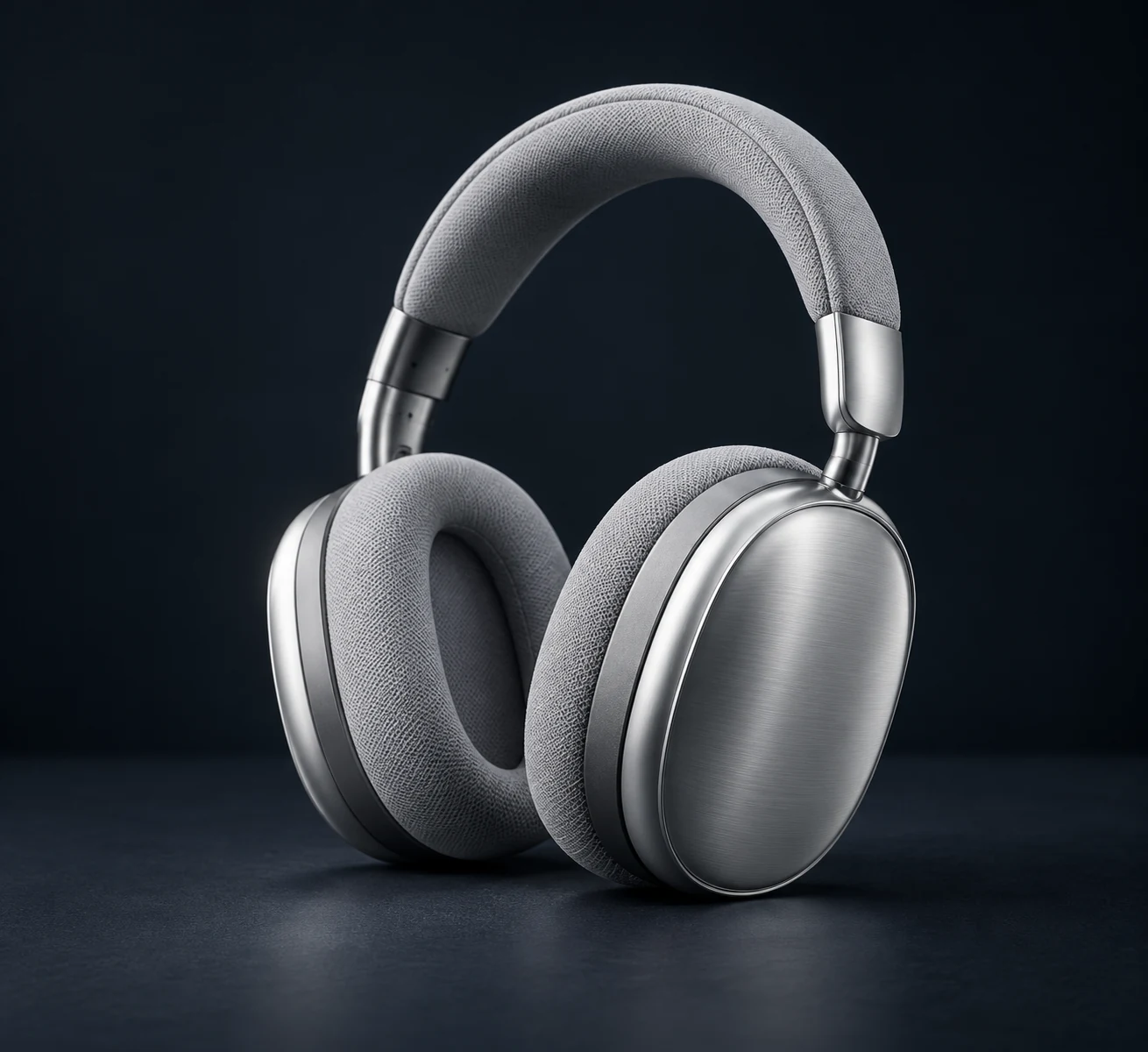
This is research-based analysis of a device category, not a hands-on test or a model ranking. Images are AI-generated illustrations. Verify the exact specifications with the manufacturer before buying.
A good pair of headphones should make an ordinary day easier. That might mean less train noise on a commute, fewer distractions at a shared desk, or a comfortable way to listen in the evening. Start with that job before comparing feature lists. This is a review of the category and its trade-offs, rather than a recommendation for a specific model.
Start with fit, then sound
Comfort is personal. Earcup depth, the shape of the pads, headband adjustment, and clamping pressure can matter more than a small difference in weight. If you wear glasses, try the headphones with them. A seal that feels fine for five minutes may press against the arms of your frames over a long work session.
When an in-store trial is unavailable, choose a seller with a clear return policy and check whether opened headphones can be returned. Listen at a comfortable level with familiar recordings. Pay attention to whether voices sound natural and whether you can follow the bass line without turning everything up. An equalizer can adjust balance, but it cannot change the physical fit.
Understand what noise cancellation can do
Active noise cancellation uses microphones and processing to counter some surrounding sound. It works alongside the passive isolation provided by the ear pads. Sony’s explanation of noise cancellation describes why steady background noise is a different challenge from changing voices and other irregular sounds. Do not expect complete silence from any pair.
A transparency or ambient mode can be useful when you need to hear an announcement. Its presence on a specification sheet does not tell you how natural it sounds. Wind can also affect microphone-based modes; Sony documents model-dependent settings that may help. Treat these as reasons to try a pair in your routine, rather than assume every implementation behaves the same way.
Check the connection you will actually use
If you move between a phone and a laptop, check how device switching works. Some headphones support simultaneous connections; others require a manual switch. Confirm the exact model’s documentation, including any limits when a particular codec is enabled. A higher Bluetooth version number alone does not describe the full listening experience.
For a cable connection, confirm whether the cable carries audio, whether the microphone works over that cable, and whether playback requires battery power. USB-C can mean charging only on one pair and digital audio on another. These small details become important on a long flight or when a work laptop restricts wireless accessories.
Look beyond the battery headline
Manufacturer battery figures apply to particular test settings. Noise cancellation, volume, calls, and connection choices can change runtime. Compare figures measured with the modes you intend to use. Fast charging can help, but it is worth checking the required charger and the stated charging conditions too.
Replacement ear pads, a usable carrying case, and a clear warranty can add more everyday value than another sound mode. Before paying extra, make a short list: comfortable for your longest session, suitable noise control, reliable switching, and a practical way to carry and charge the pair.
Why consider this category
- A useful format for extended desk and travel listening
- Physical controls and replaceable ear pads are available on some models
- Larger earcups can provide a comfortable fit without an in-ear seal
Trade-offs to know
- Bulkier to carry than earbuds
- Fit and heat build-up vary substantially
- Noise cancellation does not remove every surrounding sound
Who this suits
Commuters, desk workers, and listeners who prefer an over-ear fit. If pocketability matters most, compare earbuds before deciding.
The Gizmo Verdict
Make room for better listening.
Choose the pair you can comfortably wear for your real listening sessions. Then compare noise control, connections, and ownership costs. A long feature list is useful only when those features solve a problem you actually have.
Sources & editorial method
Published October 18, 2026. We consulted the official resources below for technical background and wrote our own buying framework. References to individual brands illustrate a feature or concept, rather than endorse a model. Features, availability, and documentation can change.

Found something that needs correcting? Email the editor.
